

Fiberglass Tape Types
Fiberglass tape can mean several different products: adhesive glass cloth tape, open-grid drywall mesh, filament-reinforced packaging tape, or woven reinforcement tape used with resin. All can contain glass fibers, but the backing, adhesive and intended application determine what the tape can do.
This guide helps buyers distinguish the constructions before ordering. For industrial masking and wrapping, start with APT Glass Cloth Tape; for carton reinforcement or composite work, a different construction may be needed.
Images are AI-generated illustrations of typical applications, not photographs of customer installations.
Fiberglass tape types at a glance
| Tape type | Typical construction | Primary selection question |
|---|---|---|
| Adhesive glass cloth tape | Closely woven fiberglass cloth with an adhesive layer | Does the exact grade suit the masking, wrapping or holding conditions? |
| Fiberglass mesh drywall tape | Open-grid mesh, often self-adhesive, used with a finishing compound | Is it specified for the board, joint and compound system? |
| Filament strapping tape | Film backing reinforced with glass yarns and coated with adhesive | Does it meet the packaging or bundling requirement? |
| Woven reinforcement tape | A woven glass-fiber strip, commonly supplied without pressure-sensitive adhesive for resin wet-out | Does its width, weave and sizing suit the resin and laminate design? |
1. Adhesive glass cloth tape for industrial masking and wrapping
Glass cloth tape has a continuous woven fabric backing rather than a large open mesh. An adhesive layer allows the tape to bond to a compatible surface without a separate resin wet-out step. Applications can include high-temperature masking, harness wrapping, bundling, holding, and seaming panels, depending on the grade.
The complete construction matters. A glass-fiber backing does not establish the usable temperature of the adhesive, the removal behavior, or an electrical approval. Check the exact product data and test on the actual substrate through the intended process.
APT Glass Cloth Tape lists a 5 mil backing and 7 mil total thickness. Use total thickness when checking clearance or overlap. For more application detail, see our glass cloth tape uses and selection guide.

2. Fiberglass mesh tape for drywall joints
Drywall mesh tape has visible openings between its yarns. Self-adhesive versions hold the mesh in position before the specified joint compound is applied. The mesh and finishing material work as a system; a self-adhesive backing does not make the mesh a finished repair by itself.
Choose according to the board, joint, repair conditions and compound instructions. A product intended for drywall is different from a mesh specifically designed for cement board or another alkaline environment. Follow the manufacturer's system instructions rather than substituting an industrial masking tape.
3. Filament tape for packaging and strapping
Filament tape uses glass yarns to reinforce a film-backed adhesive tape. The reinforcement may run in one direction or in a cross pattern. Film and adhesive formulations vary, so check the actual product rather than assuming every reinforced tape has the same backing.
Typical jobs include carton reinforcement, strapping and bundling. Select using the load, surface, storage and handling conditions. High tensile strength does not turn a packaging tape into a high-temperature masking tape or a composite reinforcement material. Review Reinforced Filament Strapping Tape for available product details.
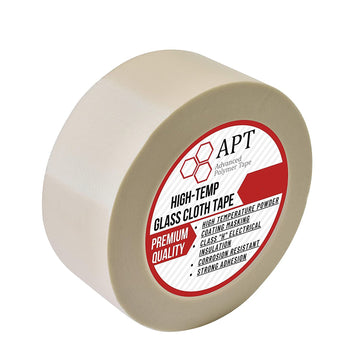
Glass Cloth Tape
Adhesive-backed fiberglass cloth tape for masking, wrapping, bundling and holding. Review the construction and available widths for your application.
Shop Glass Cloth Tape4. Woven fiberglass reinforcement tape for resin work
In composite work, fiberglass tape often means a woven strip placed over a seam or corner and wet out with a compatible resin. Many reinforcement tapes have no pressure-sensitive adhesive: the resin system and laminate design provide the finished bond and reinforcement.
Before choosing, check the width, fabric weight or thickness, weave, fiber sizing and resin compatibility. Adhesive-backed glass cloth tape should not be assumed to replace a specified reinforcement fabric. Explore Woven Fiberglass Tapes and our woven fiberglass tape and epoxy application guide for this separate application.
Where does PTFE glass cloth tape fit?
PTFE glass cloth tape is another distinct construction: glass fabric coated or impregnated with PTFE, combined with an adhesive in adhesive-backed versions. It is selected for properties such as a release surface on compatible process equipment. Ordinary glass cloth tape does not automatically provide the same surface behavior.
For heat-sealing or release applications, review Teflon Glass Cloth Tape and the PTFE tape types guide.
How to choose the right fiberglass tape
- Name the job: removable masking, wrapping, a drywall joint, packaging reinforcement or resin-based reinforcement.
- Check the construction: dense cloth, open mesh, reinforced film or reinforcement fabric; confirm whether adhesive is present.
- Check operating conditions: surface finish, load, temperature and exposure duration, chemicals, moisture and removal requirements.
- Check dimensions: width, roll length and total installed thickness, including adhesive or overlaps where relevant.
- Test the intended assembly: use a representative sample and the supplier's application instructions before committing to production.
Frequently asked questions
Is glass cloth tape the same as fiberglass tape?
Glass cloth tape is one type of fiberglass tape. The broader term also covers mesh, filament-reinforced film and woven reinforcement strips. Include the construction and intended job when requesting a quote.
Is all fiberglass tape self-adhesive?
No. Many masking, packaging and drywall tapes have an adhesive layer, while reinforcement fabrics are commonly used with a separate resin. Confirm the exact product.
Can fiberglass mesh tape replace glass cloth masking tape?
Do not assume so. Open mesh and a dense cloth backing behave differently, and their adhesive systems and intended applications differ. Use the construction specified for the process.
Does fiberglass tape automatically have a high-temperature or electrical rating?
No. Use the documented limits and approvals for the finished tape. Neither the fiber name nor the appearance establishes an electrical working-voltage rating or a fire certification.
Choose the construction before choosing the size
For adhesive masking and wrapping, compare Glass Cloth Tape. For packaging, review Filament Strapping Tape. For resin-based reinforcement, review Woven Fiberglass Tapes. Contact APT with your substrate, application, dimensions and operating conditions if you need help narrowing the choice.
Technical references
Manufacturer examples illustrate the different constructions; their product-specific ratings do not apply to APT tape.