

Aluminum Foil Tape vs. Duct Tape: Which Should You Choose?
Aluminum foil tape and conventional duct tape can look similar on a roll, but their backings and intended jobs differ. Foil tape provides a metal surface for suitable seaming, sealing and thermal-contact applications. Cloth-backed duct tape is commonly used for general maintenance, bundling and temporary holding.
Choose by the surface, temperature, exposure and required approvals. Neither the word “duct” nor a silver finish establishes suitability for a particular HVAC system.
Aluminum foil tape vs. duct tape at a glance
| What to compare | Aluminum foil tape | Conventional duct tape |
|---|---|---|
| Typical backing | Aluminum foil | Cloth reinforcement with a polymer coating |
| Adhesive | Varies by product; APT Aluminum Tape uses acrylic | Often rubber-based; verify the specific product |
| Common applications | Compatible insulation seams, specified sealing and appliance assembly | Bundling, holding, marking and general maintenance |
| Heat performance | Use the complete tape's listed rating | Use the complete tape's listed rating |
| HVAC suitability | Confirm the required listing for the exact tape | Do not assume general-purpose cloth tape is a qualified duct closure |
| Moisture exposure | Check the adhesive, seam design and exposure conditions | Check the backing, adhesive and exposure conditions |
These are broad construction differences, not a performance comparison between every foil tape and every duct tape. Specialty products can differ substantially.
When aluminum foil tape is worth considering
Consider aluminum foil tape when the job calls for a conformable metal facing, a reflective surface, or foil-backed seaming and sealing. APT lists HVAC duct insulation and sealing, plus refrigerator and freezer coil attachment, among its aluminum tape applications.
For appliance assembly, compare the tape with the equipment maker's requirements for thermal contact and bonding. For insulation seams, check the facing material and required closure method. A bond on smooth metal does not predict the same result on dusty insulation, textured coatings or other surfaces.
When conventional duct tape may fit the job
Cloth-backed duct tapes are commonly chosen for maintenance tasks such as bundling, holding and marking. Many are designed to tear by hand, which can make short pieces convenient to apply. Check the exact product for required strength, removal behavior and compatibility with the finish.
For example, 3M describes its 3900 duct tape as polyethylene film over cloth with rubber adhesive, intended for general maintenance applications. That construction illustrates this category; its specifications should not be transferred to a different tape.
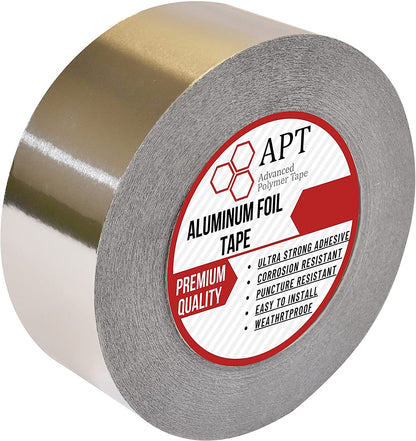
Aluminum Foil Tape
2 mil aluminum backing with acrylic adhesive. 3.4 mil total thickness. Available in 2-inch × 55-yard rolls.
Shop Aluminum TapeWhich tape should you use for HVAC ducts?
Start with the duct system and its installation requirements. The U.S. Department of Energy's duct-sealing guidance identifies approved mastic, UL 181 tape or an equivalent suitable material, and advises against regular cloth-backed duct tape for duct sealing because it can dry out and fail.
This does not mean every aluminum foil tape has the required approval. Confirm the exact tape listing and installation instructions for the system. APT Aluminum Tape lists HVAC-related applications, but its current product information does not establish UL 181 certification. Request confirmation before specifying it where that listing is required.
Compare temperature ratings carefully
A foil backing does not make a tape suitable for every hot surface. The adhesive and bond conditions also matter. APT Aluminum Tape lists a temperature range of −65°F to 300°F (approximately −54°C to 149°C). This is the listed product range, not a separate continuous-use or short-term exposure rating.
For either tape type, identify the temperature at the bond line, exposure duration and any repeated heating or cooling. Request application-temperature guidance as well: the conditions for installing the tape may differ from those for service after bonding.
Check thickness, moisture and electrical requirements
APT Aluminum Tape has 2 mil foil backing and 3.4 mil total thickness including adhesive. Use total thickness when considering the installed build-up; overlaps add another layer. Compare this with the actual duct tape under consideration rather than assuming one category is always thicker or stronger.
For damp or outdoor conditions, check the complete product's suitability. A moisture-resistant backing does not guarantee a waterproof joint or indefinite outdoor service. Surface preparation, edge adhesion and exposure all affect the result.
Likewise, electrically conductive foil does not establish conductivity through its adhesive. APT lists acrylic adhesive without a conductive-adhesive specification. Confirm electrical continuity requirements before using any tape for grounding or EMI shielding.
A practical selection checklist
- Identify the job: bundling, temporary holding, insulation seaming, duct sealing or appliance assembly.
- Check the exact substrate and finish, including contamination or texture that could weaken the bond.
- Compare the complete tape's temperature and environmental ratings with actual service conditions.
- Verify any required approval and follow the equipment or system maker's installation instructions.
- Test the tape on a representative area before committing to the full application.
Review the aluminum tape option
APT Aluminum Tape is offered in 2-inch × 55-yard rolls with acrylic adhesive and a removable paper liner. Review the full aluminum tape specifications or contact APT with your surface, dimensions and operating conditions.
Further reading: U.S. Department of Energy: tight duct sealing and 3M Multi-Purpose Duct Tape 3900 construction and applications. These references provide general context, not certification or approval of APT products.