Collection: Anti-static Applications
Selecting tape for anti-static applications starts with the job: limiting charge generation during handling, controlling charge dissipation, or making a conductive connection. These are different requirements. Electronics manufacturing, packaging, and assembly processes should use tape selected against their specific static-control requirements.
Conductive copper tape versus ESD-qualified tape
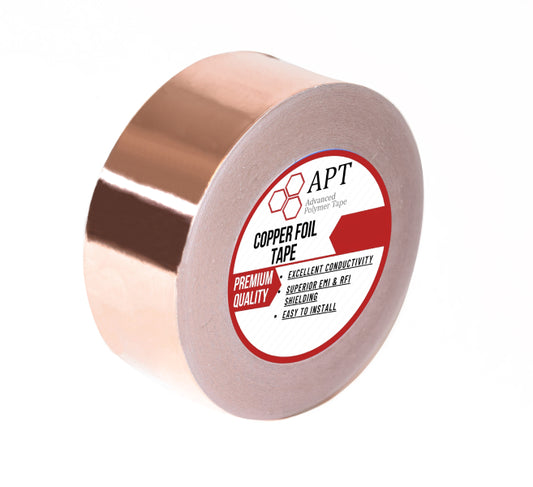
APT Copper Tape uses copper foil with conductive acrylic adhesive. Its listed construction is a 1.4 mil backing and 2.8 mil total thickness. It is a conductive material option to evaluate for a specified connection or shielding design.
Copper conductivity alone does not demonstrate low charge generation, a controlled dissipative resistance range, or suitability for direct contact with ESD-sensitive components. Do not assume that an “anti-static” description establishes compliance with your ESD-control requirements.
What to verify before selecting an ESD tape
- The relevant surface and adhesive resistance or resistivity values, units, and test method.
- Charge generation during unwinding and removal, including any measured peel-voltage conditions.
- The temperature and humidity used for testing, and whether they represent your process.
- Adhesion, residue, substrate compatibility, and the intended handling or packaging use.
- Any required qualification evidence for the exact product and its role in your static-control process.
This page does not provide measured ESD resistance or peel-voltage values for copper tape. If you need low-charging or static-dissipative tape, contact us to confirm product availability and request the relevant technical data before specifying a product.
Working on an EMI shielding project?
See our EMI shielding tape selection guidance for copper foil construction, conductive adhesive, seam continuity, and finished-assembly testing considerations.